
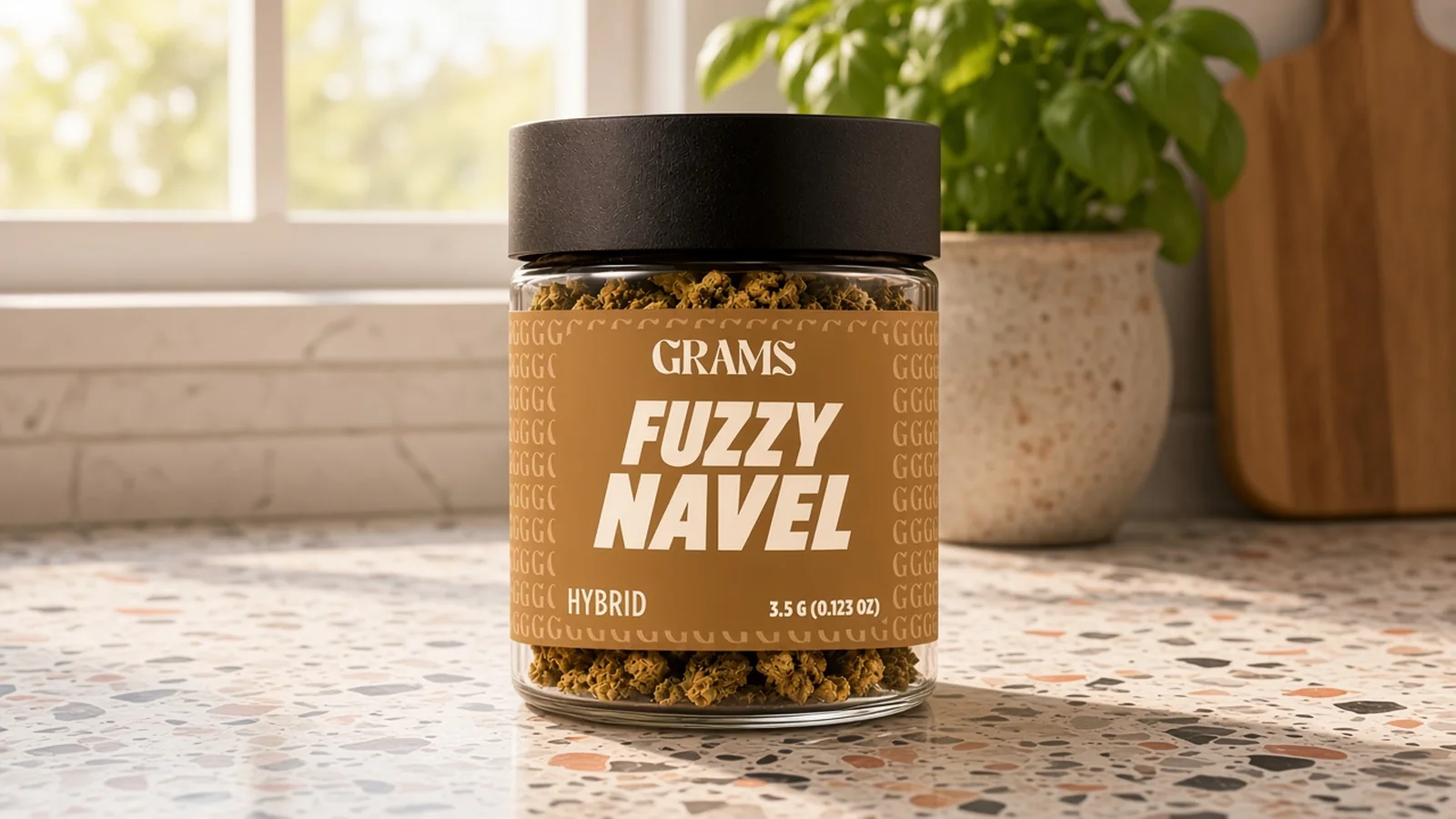
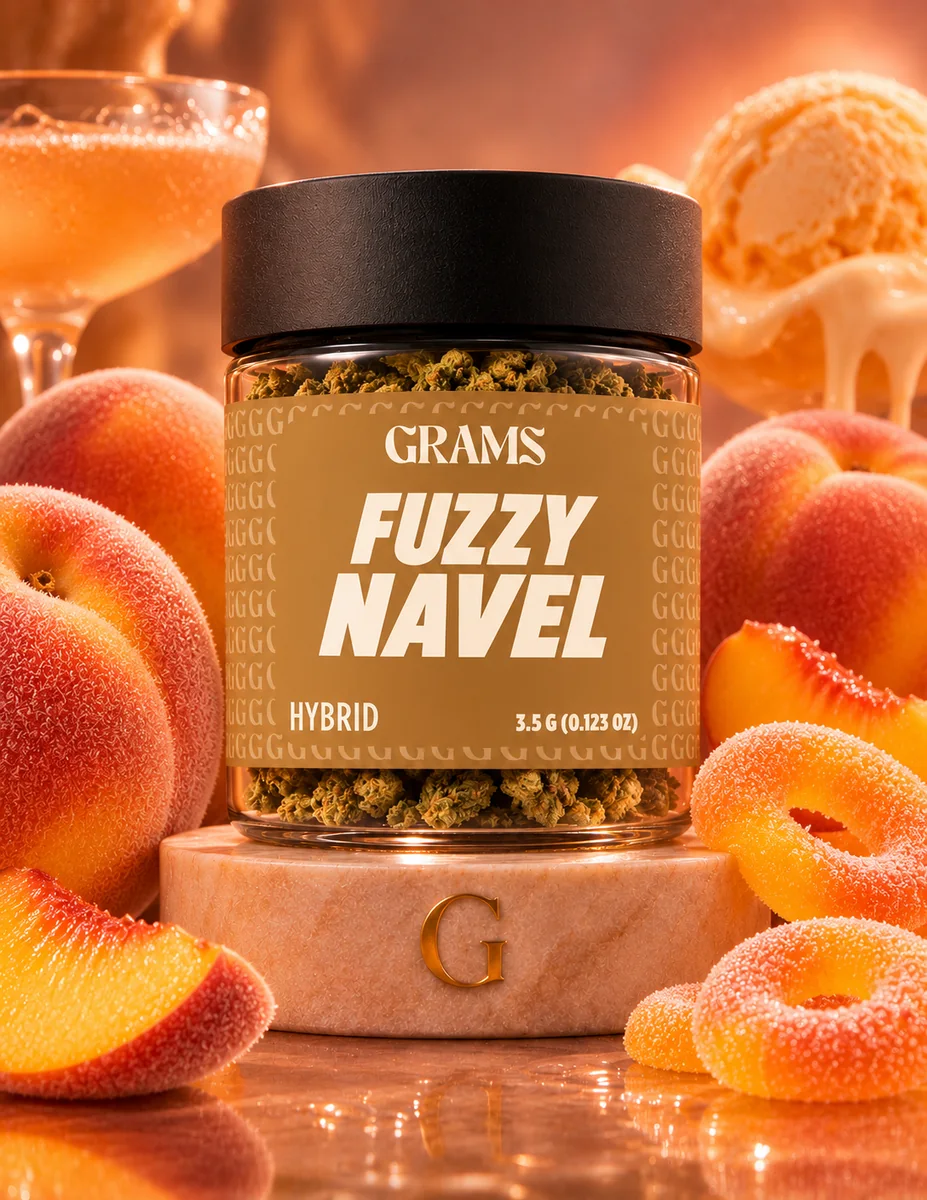
Myrcene (listed on lab reports as beta-myrcene) is an aromatic compound with an earthy, herbal, slightly musky smell. It is found in hops, bay leaves, lemongrass, thyme and mango, and it shows up on many cannabis lab reports. At Grams it leads the terpene list of some of our jars, including the current Fuzzy Navel batch.
This guide covers what myrcene smells like, which Grams batches measure the most of it, and the two popular claims about it that don't hold up.
What does myrcene smell like?
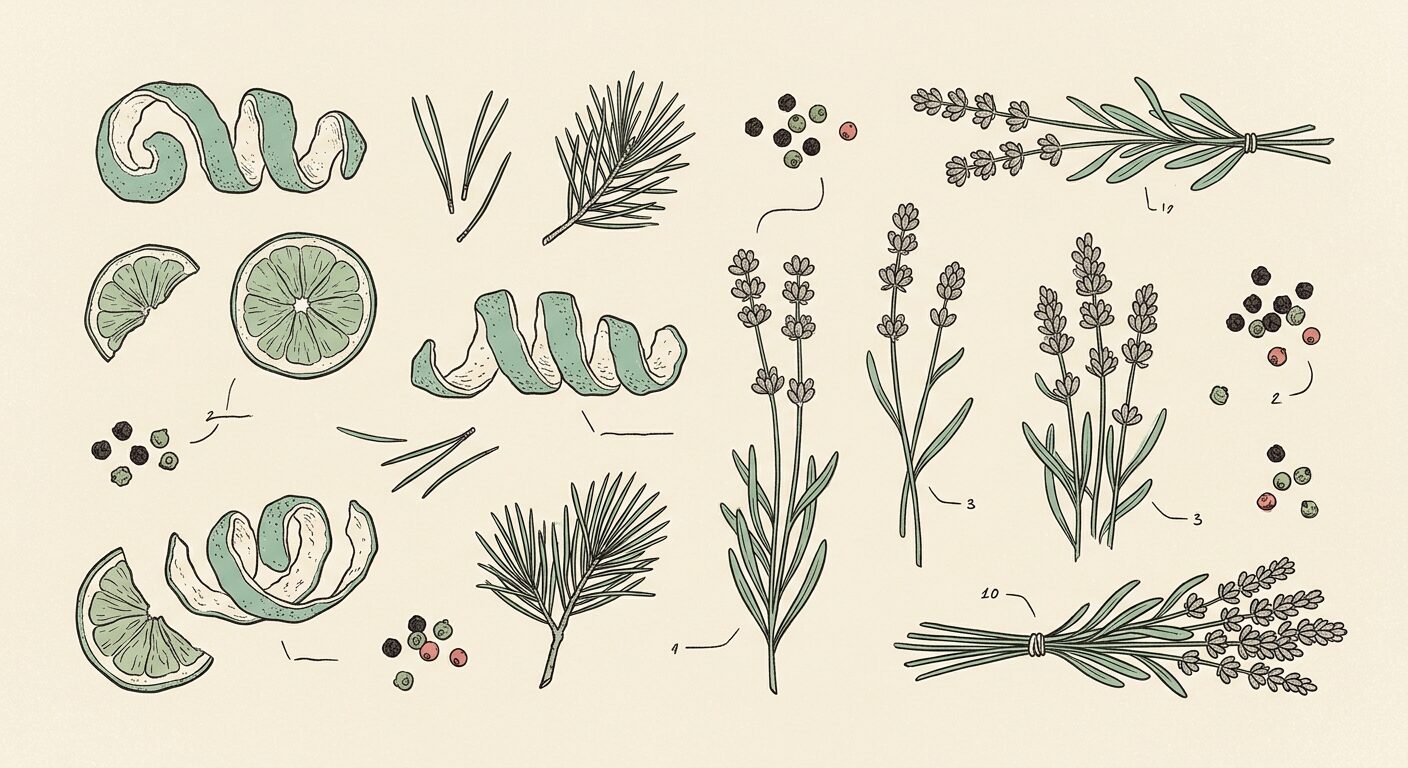
Think of the green, resinous smell of fresh hops, or crushed thyme and bay leaf. Some people also pick up a ripe, fruity edge, which is where the mango comparison comes from. On its own myrcene isn't loud like citrus or pepper. It tends to sit underneath a blend and make it read as earthy or herbal rather than bright.
Myrcene is a monoterpene, a small, light molecule of ten carbon atoms. Light molecules evaporate easily, which is part of why a jar smells strongest when it is first opened and why storage matters. Keep flower sealed, cool and out of direct light.
Is myrcene the most common terpene in cannabis?
You will often read that it is. Broad surveys of cannabis have found it to be a frequent leader, but that doesn't describe every producer's shelf. Across the 67 batch summaries on our product pages, myrcene is listed in 39 and leads only 6. Beta-caryophyllene leads 26 and limonene 21. A general rule about cannabis is a starting point; the report for your batch is the answer.
Which Grams products have the most myrcene?
| Product | Batch | Beta-myrcene | Rank in batch |
|---|---|---|---|
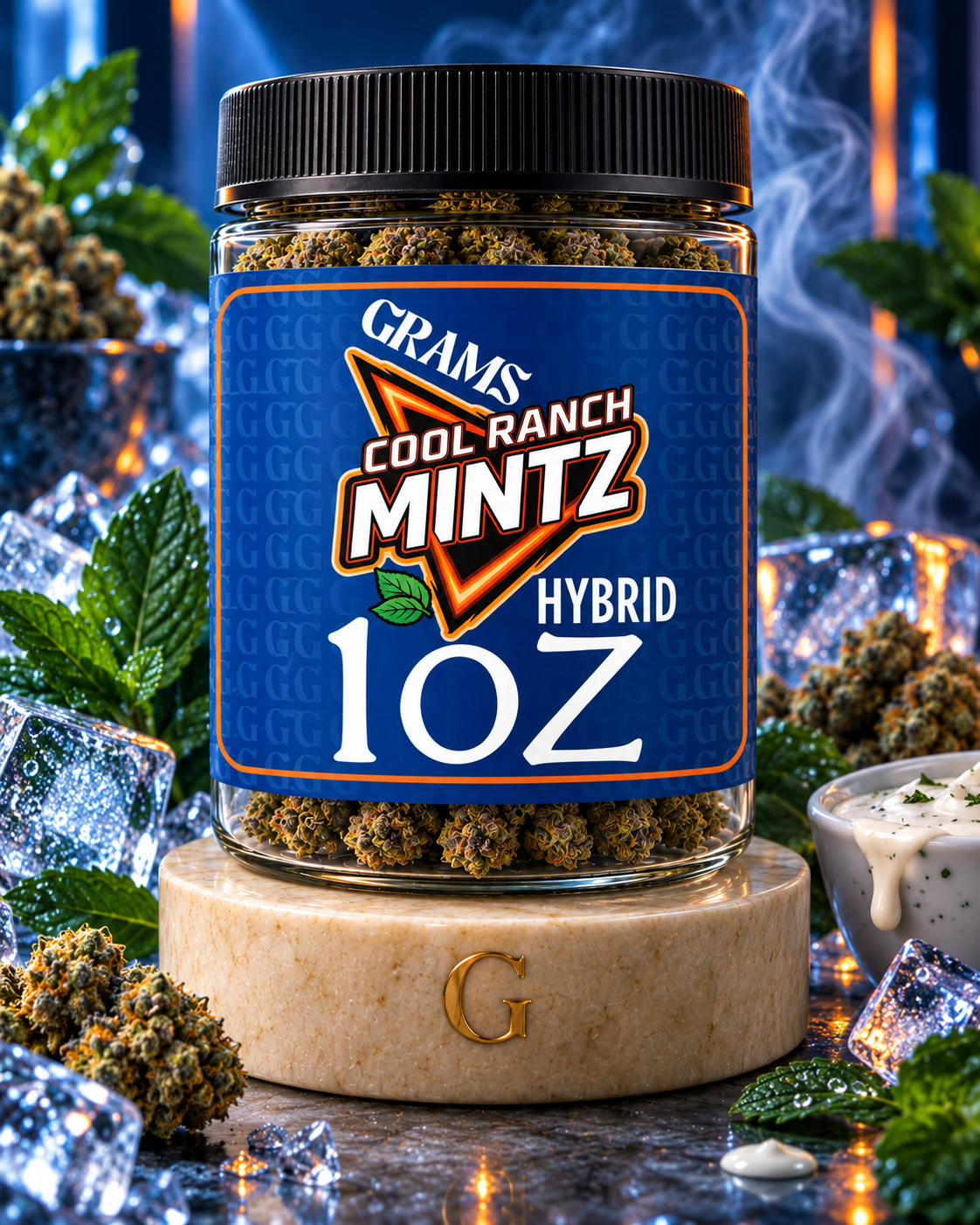
| Cool Ranch Mintz · Flower 28g | TCR-F-CRM-901 | 0.6223% | 1st |
| Fuzzy Navel · Flower 3.5g | TCR-F-FN-1026 | 0.6196% | 1st |
| Nepal Diesel · Flower 3.5g | TCR-F-ND-1026 | 0.5432% | 3rd |
| Nepal Diesel · Flower 28g | TCR-FOZ-ND-1026 | 0.5347% | 3rd |
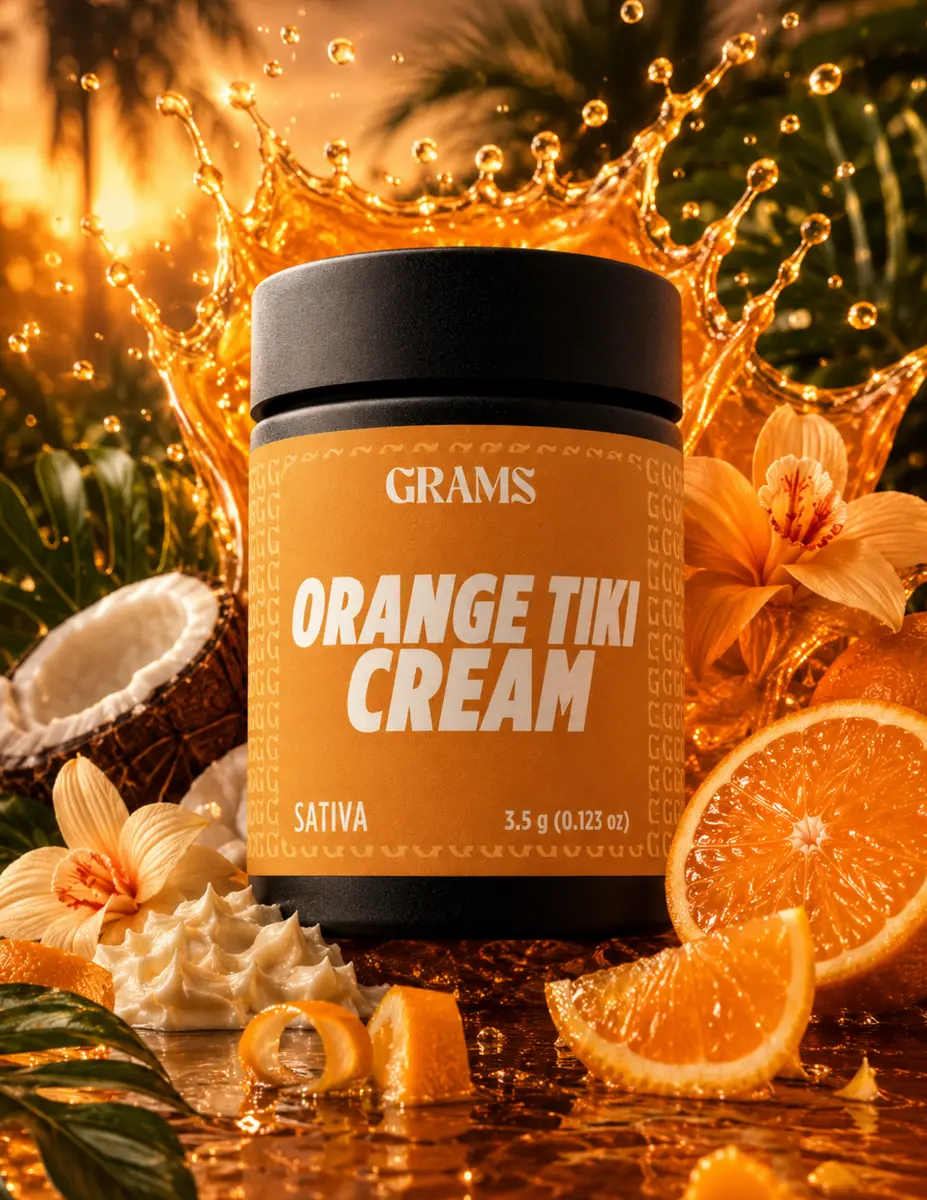
| Orange Tiki Cream · Flower 28g | TCR-FOZ-OTC-1026 | 0.5142% | 1st |
A percentage on a lab report is by weight, so 0.62% works out to about 6.2 milligrams of myrcene in each gram of flower. Fuzzy Navel's batch is a good example of a myrcene-led blend that isn't only myrcene: limonene follows at 0.4240%, then linalool and beta-caryophyllene. Nepal Diesel's two current batches show the opposite case. They carry more myrcene than most of our jars, yet beta-caryophyllene and limonene still measure higher.
Source: Fuzzy Navel report, batch TCR-F-FN-1026
Source: Cool Ranch Mintz report, batch TCR-F-CRM-901
What myrcene's reputation gets wrong
Both ideas are everywhere, and neither is a reliable guide. Myrcene is often linked to heavy, sleepy effects and to the indica label, but research on commercial cannabis has found that those labels track a product's chemistry poorly, and no single terpene sets how a product feels. The mango tip, eating a mango before cannabis to strengthen it, rests on the fact that mangoes contain myrcene. There is no good evidence that it changes anything.
How cannabis affects you depends on the cannabinoids, the amount, the format, your tolerance and the setting. Use myrcene as a word for an earthy, herbal aroma, not as a prediction.
How to find myrcene on a Grams lab report
Find the batch number printed on your jar, open the matching report on our Lab Tests page and scroll to the terpene panel. Myrcene appears as beta-myrcene. Compare it with the total terpenes line and with the terpenes listed around it. A batch with 0.6% myrcene and 2.8% total terpenes reads very differently from one where myrcene is half the total.
What are terpenes? A beginner's guide
The rest of the terpene series
This guide is one of seven. Each covers one terpene, what it smells like and where it turns up on Grams lab reports.
Limonene: aroma and Grams lab results
Beta-caryophyllene: aroma and Grams lab results
Linalool: aroma and Grams lab results
Pinene: aroma and Grams lab results
Humulene: aroma and Grams lab results
Terpinolene: aroma and Grams lab results
Source: PubChem compound summary for myrcene
Cannabis delivery from Graham Avenue
Adults 21 and older should consume responsibly and never drive after using cannabis.
Sources and further reading
Nature Plants: research on cannabis labeling and chemical variation