

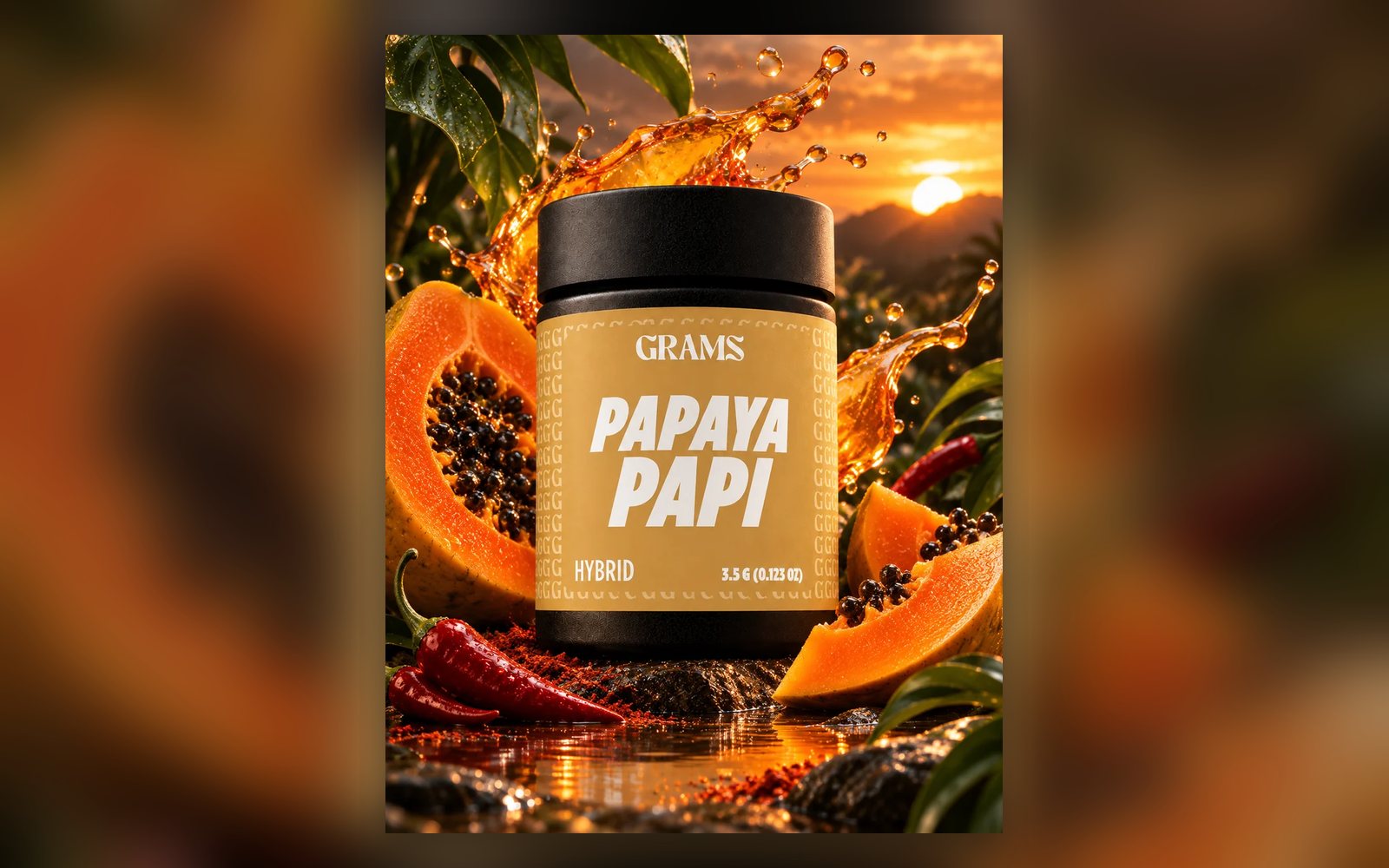
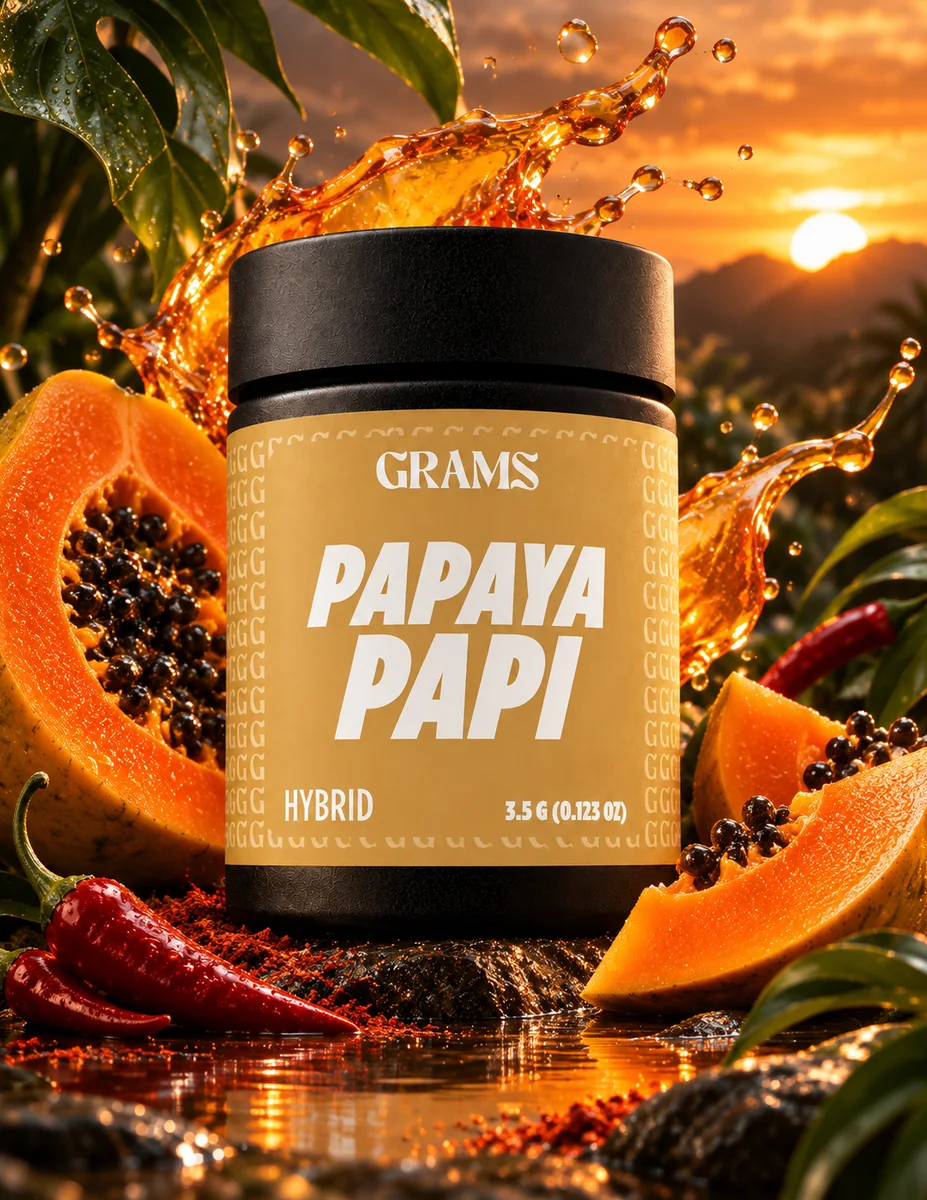
Papaya Papi arrives in a gold-labeled 3.5g jar, one of seven new Grams jars from the late-October lab run. It is labeled as a hybrid.
The name suggests fruit. The name is not an ingredient list: there is no papaya in the jar, only flower. What the batch report does show is a terpene profile with no single runaway leader.
The headline numbers
| Report entry | Result |
|---|---|
| Total THC | 26.632% |
| Total cannabinoids | 30.989% |
| Total terpenes | 1.3919% |
| Unit weight | 3.5g |
Total THC and total cannabinoids are different calculations, so they are not supposed to match. Total THC converts THCA into its THC equivalent. Total cannabinoids adds up every cannabinoid the lab measured.
What the terpene list says
| Terpene | Reported % | Common aroma description |
|---|---|---|
| Limonene | 0.2840% | Citrus peel |
| Beta-myrcene | 0.2304% | Earthy, herbal |
| Linalool | 0.2128% | Floral, lavender |
| Beta-caryophyllene | 0.2040% | Pepper, spice |
| Guaiol | 0.1507% | Woody, floral |
Limonene, beta-myrcene, linalool and beta-caryophyllene all land within about eight hundredths of a percent of each other, with guaiol, a less common woody terpene, close behind. That makes Papaya Papi a good jar for noticing how a blend reads when nothing dominates. Aroma descriptions are general terpene vocabulary, not a promise about how any jar will smell or feel. Your nose gets the final vote.
Match the jar to the report
These results belong to batch TCR-F-PP-1026, sampled October 22 and reported October 27, 2026. A future Papaya Papi jar can carry a different batch and different numbers, so check the batch printed on the label before comparing.
Source: full Papaya Papi report — TCR-F-PP-1026
Adults 21 and older should consume responsibly and never drive after using cannabis.
Sources and further reading
Nature Plants: research on cannabis labeling and chemical variation