

A Certificate of Analysis (COA) records laboratory results for a tested sample. It helps explain a batch, but it does not guarantee a particular experience or prove that a product is risk-free.
Match the report to the package
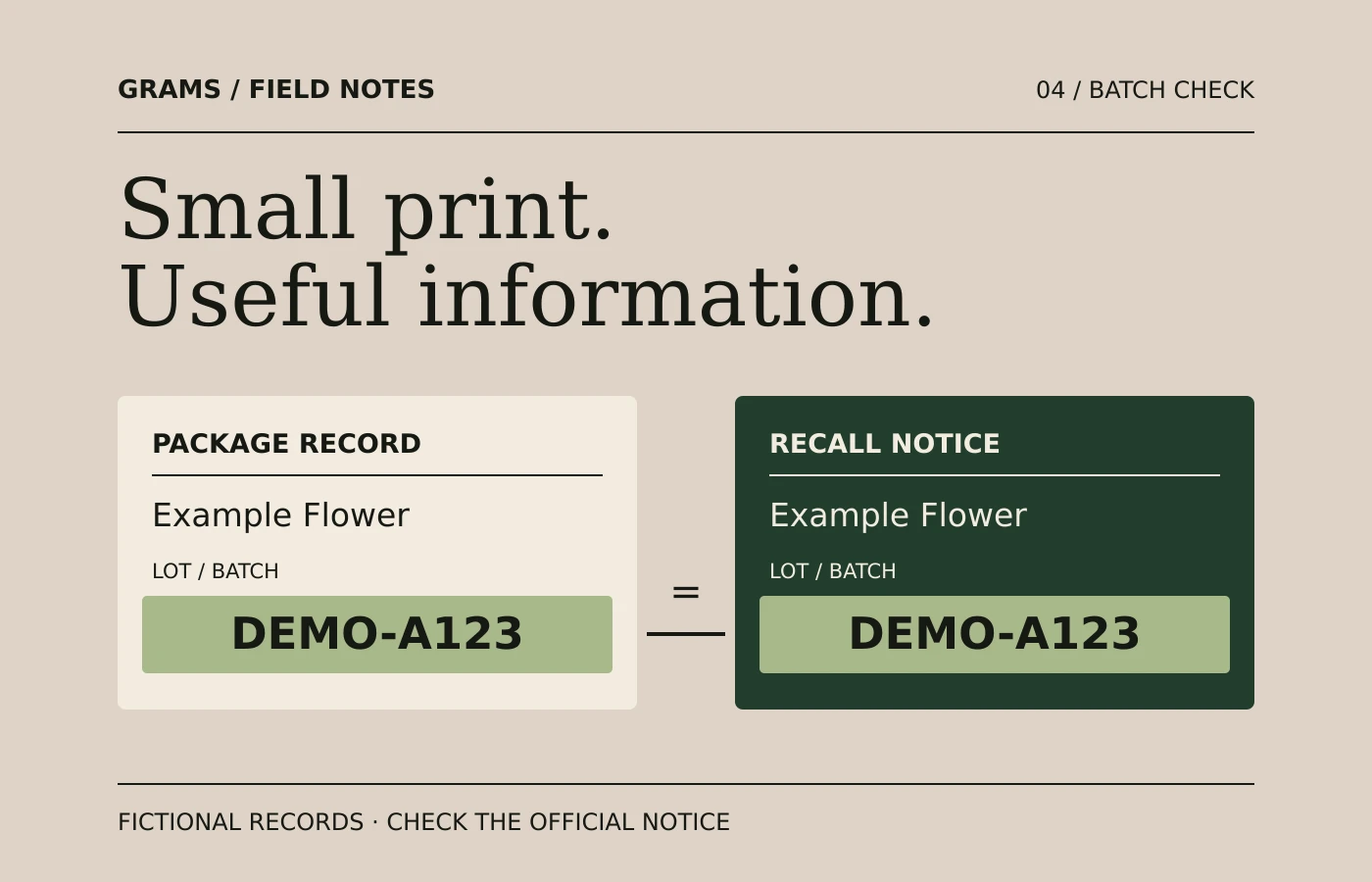
Check the product name, batch identifier, sample information, laboratory and report date. A report for another batch with the same strain name is not a substitute.
Read the units and definitions
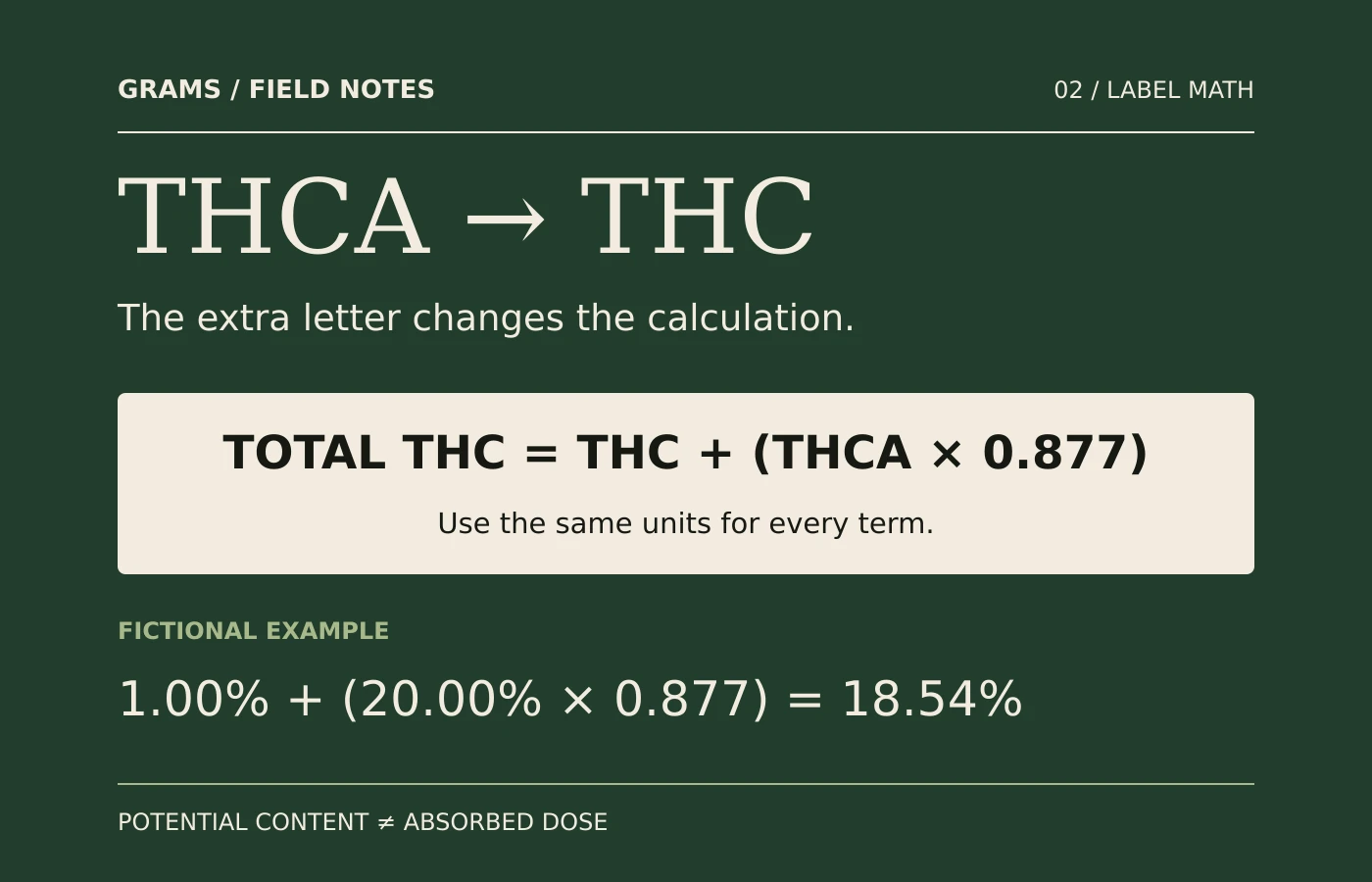
Percent by weight, milligrams per gram and milligrams per package describe different quantities. Read the report’s calculation notes before comparing total THC with a separately reported THC or THCA value.
Understand pass, not detected and reporting limits
A passing result means the sample met the applicable criteria for the tests reported. It does not mean every possible contaminant is absent. “Not detected” refers to the method’s detection limit; a value below the quantification limit cannot be reliably quantified by that method. Read the laboratory’s own legend.
Keep aroma separate from effects
Terpene measurements describe sample composition. They do not establish that a product will improve focus, relieve anxiety or make someone sleepy. THC and CBD figures also do not establish an individual dose or medical benefit.
Check what the report actually covers
Testing requirements depend on product type. Do not assume a COA verifies retail package weight, shelf life or every characteristic of an unopened package. Questions about a result belong with the laboratory or regulator.